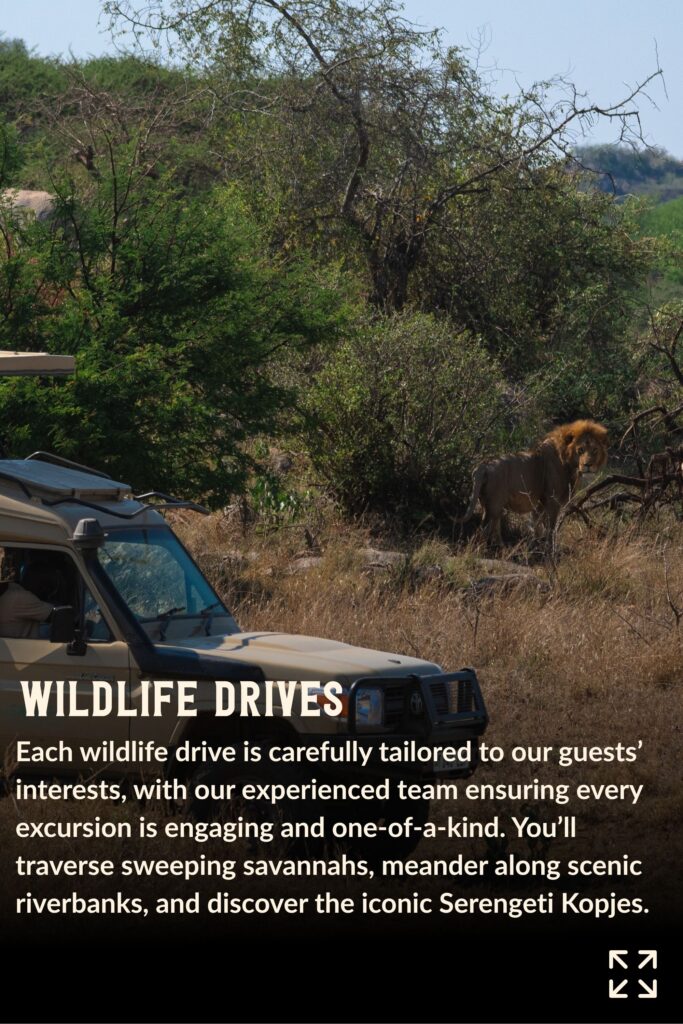
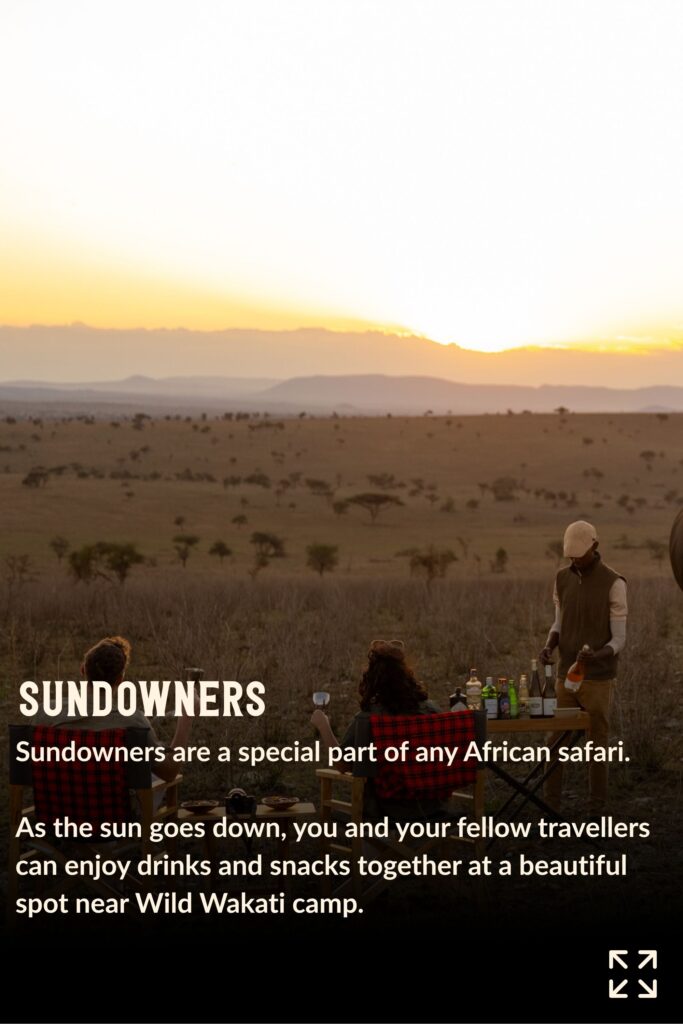
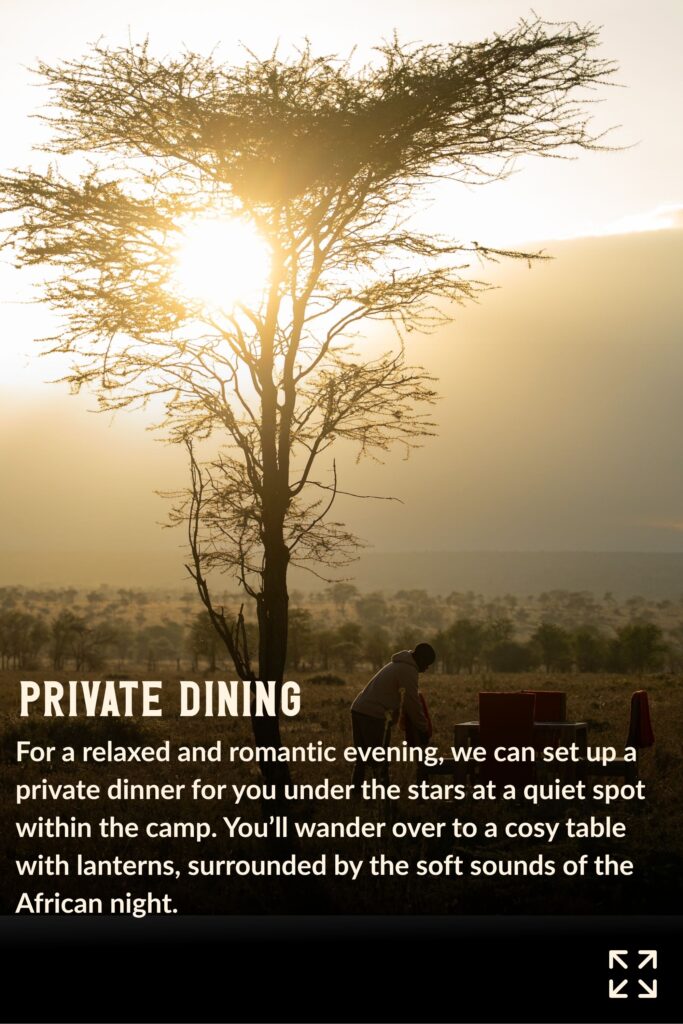
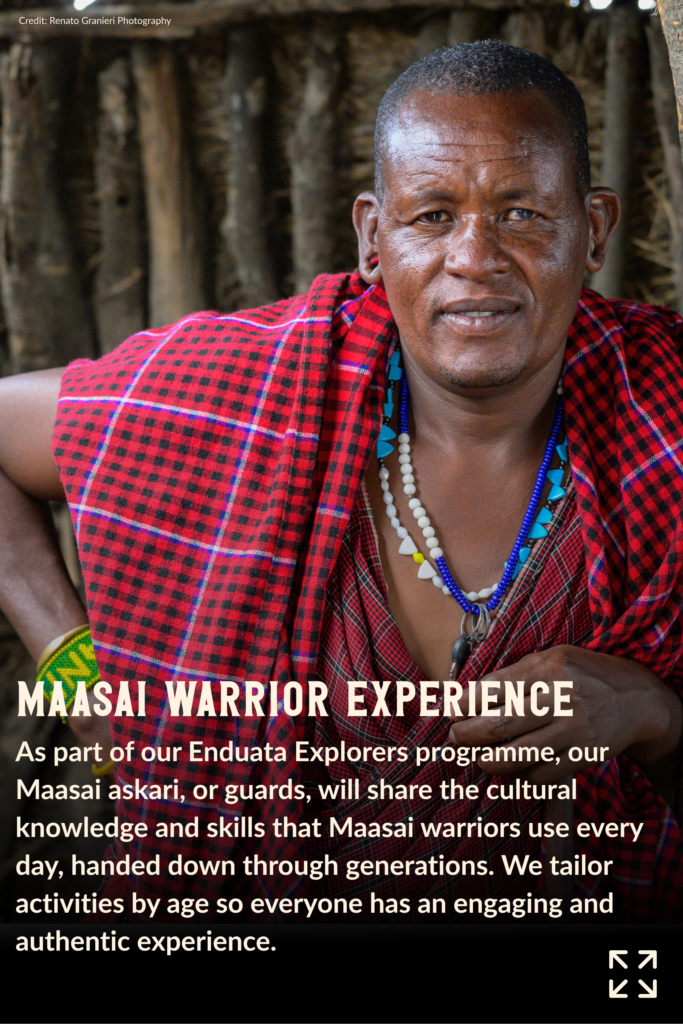
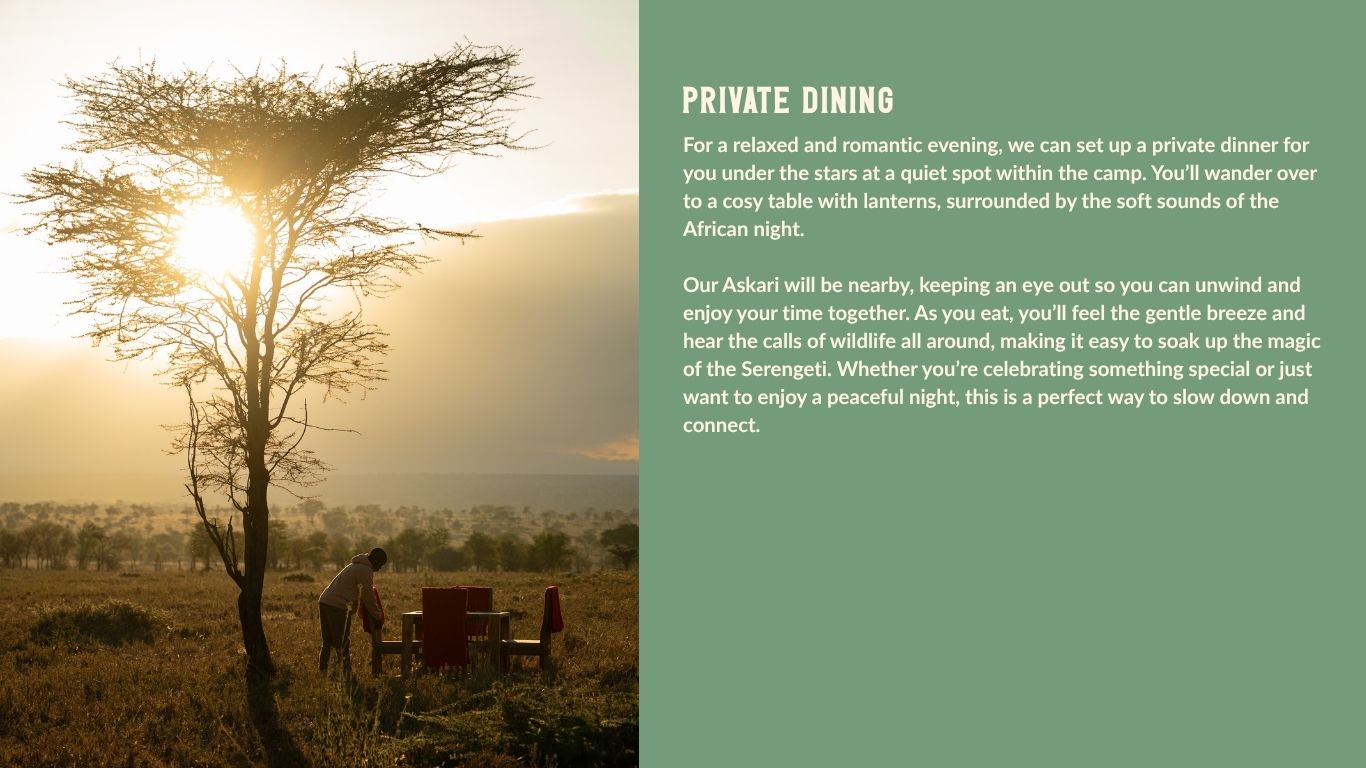
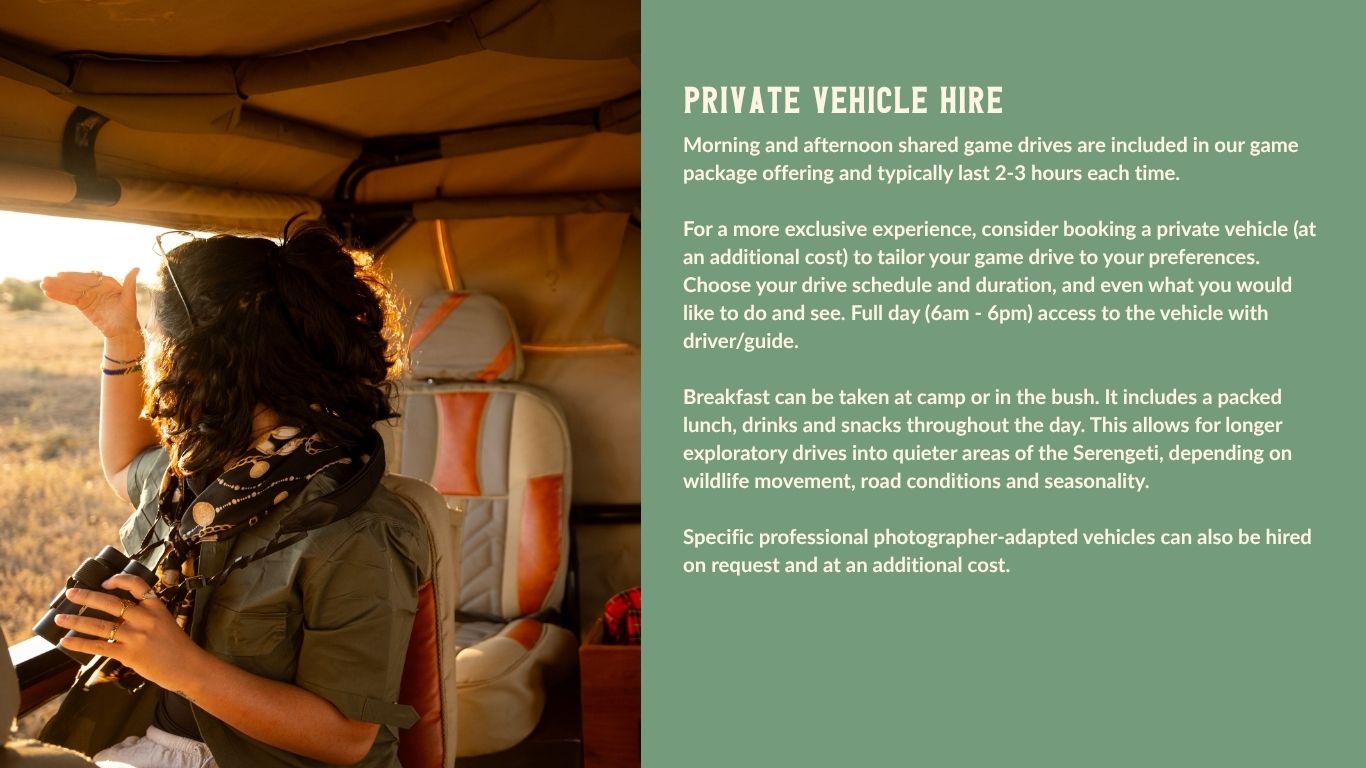
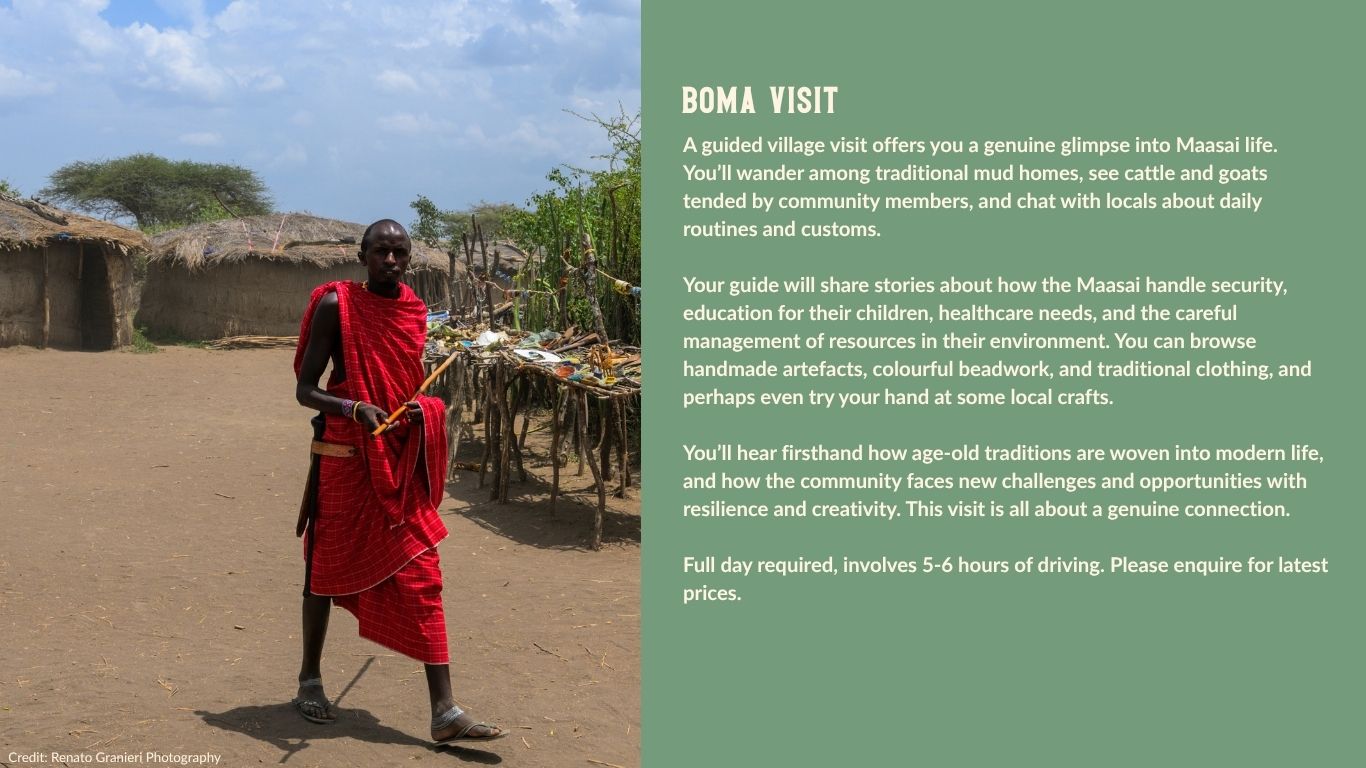
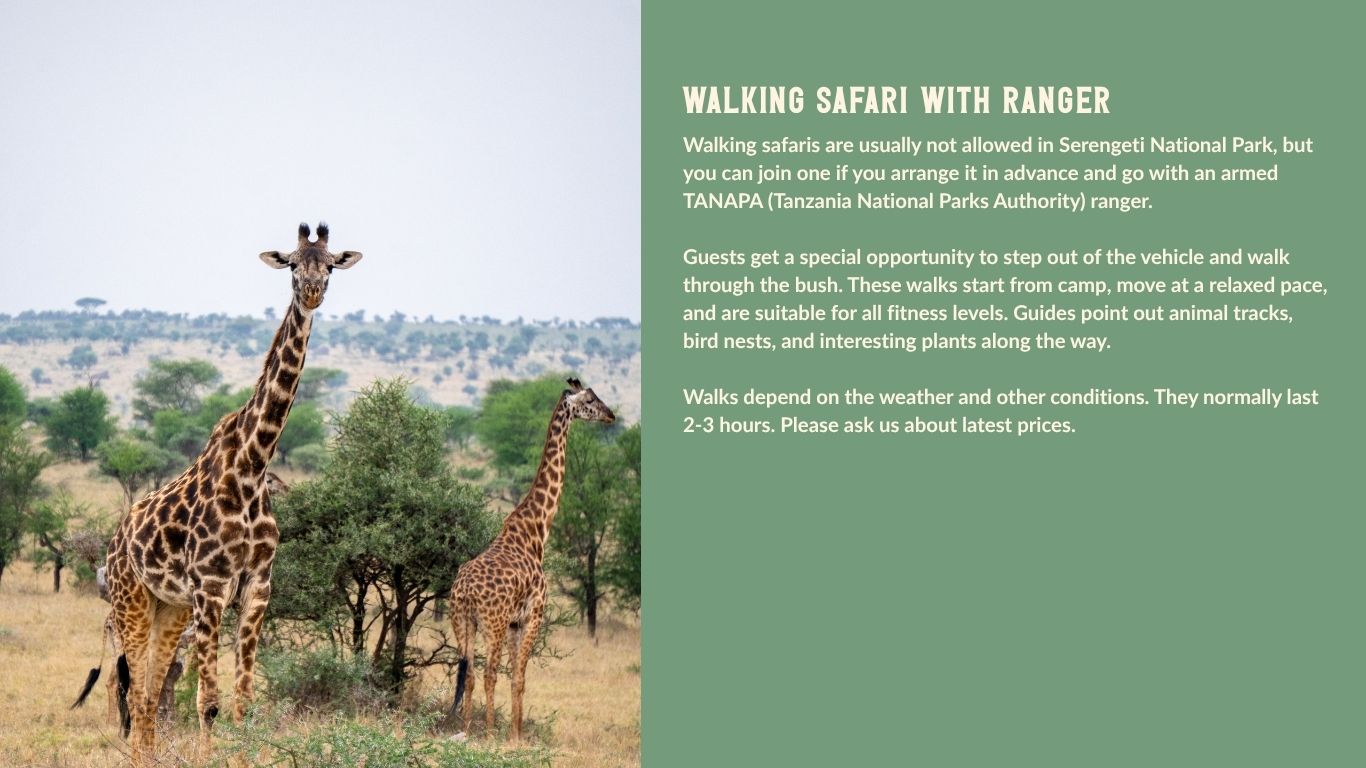
A journey to the Serengeti offers unforgettable experiences, from witnessing the Great Migration to soaring over the plains in a hot air balloon. Spot the Big Five on thrilling game drives, explore the bush with expert guides, and immerse yourself in Maasai culture. End each day in a luxurious tented camp, surrounded by the sounds of the wild under a starlit sky.

Month to Month Great Migration Breakdown
January – March

Wildebeest gather in the southern Serengeti and Ngorongoro area for calving. Around 400,000 calves are born in just a few weeks, attracting predators and offering amazing wildlife scenes. This is a time of new life and energy, as the plains come alive with young animals and protective mothers.

The herds begin migrating northwest toward the central Serengeti in search of greener grass. Zebra and antelope join in, and May marks the start of the rutting (mating) season. Long lines of animals stretch across the plains, and crocodiles await the early river crossings in the Grumeti region.

The dry season begins, and herds gather at the Grumeti River before continuing north. This is when the first major river crossings take place, with crocodile-infested waters posing a serious threat. By July, the herds reach the Mara River in the northern Serengeti, setting the stage for dramatic, world-famous crossings.

Wildebeest spread through the Masai Mara and northern Serengeti. Mara River crossings continue; intense, dangerous, and unpredictable. By late September, the chaos settles as the herds begin heading back south. Predator encounters remain frequent, and sightings are excellent in both Kenya and Tanzania during this time.

Following the short rains, the herds return to the eastern and southern Serengeti. Passing through areas like Namiri Plains, known for big cats, they find fresh grass and prepare for calving. By December, the migration completes its full circle — and the cycle begins again.

the Great Migration

Experience one of nature’s most spectacular events, The Great Migration, where over 1.2 million wildebeest, joined by 300,000 zebras and gazelles, move across the Serengeti-Mara ecosystem in search of fresh grazing and water. From the calving season on the southern plains near the Ngorongoro Conservation Area to the lush pastures of Kenya’s Masai Mara, this breathtaking journey unfolds year-round, offering a powerful display of movement, survival, and renewal.

Amid dramatic river crossings and vast herds, the migration becomes a true theatre of life, with predators like lions, cheetahs, and hyenas lying in wait, and thousands of calves born daily. It’s a raw and unforgettable glimpse into the balance of nature, and one of the greatest wildlife shows on Earth.

Shifting rainfall patterns due to climate change mean the timing varies year to year. Our month-by-month guide offers insight, but sightings are never guaranteed, which is why we always recommend giving yourself plenty of time on safari. Those who stay longer are often rewarded with the most memorable moments.

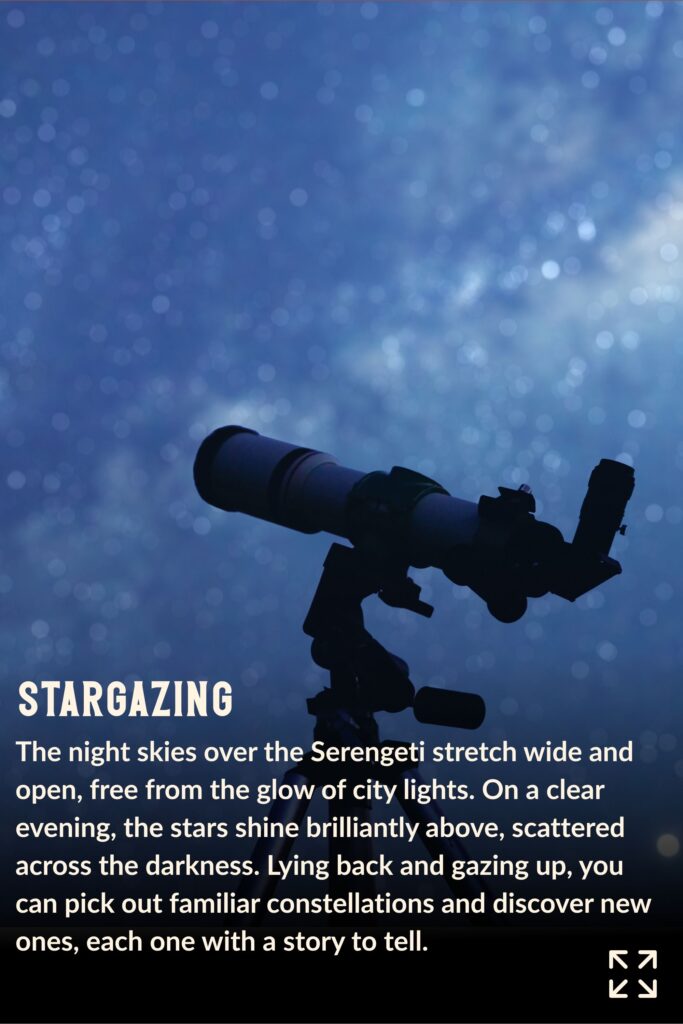
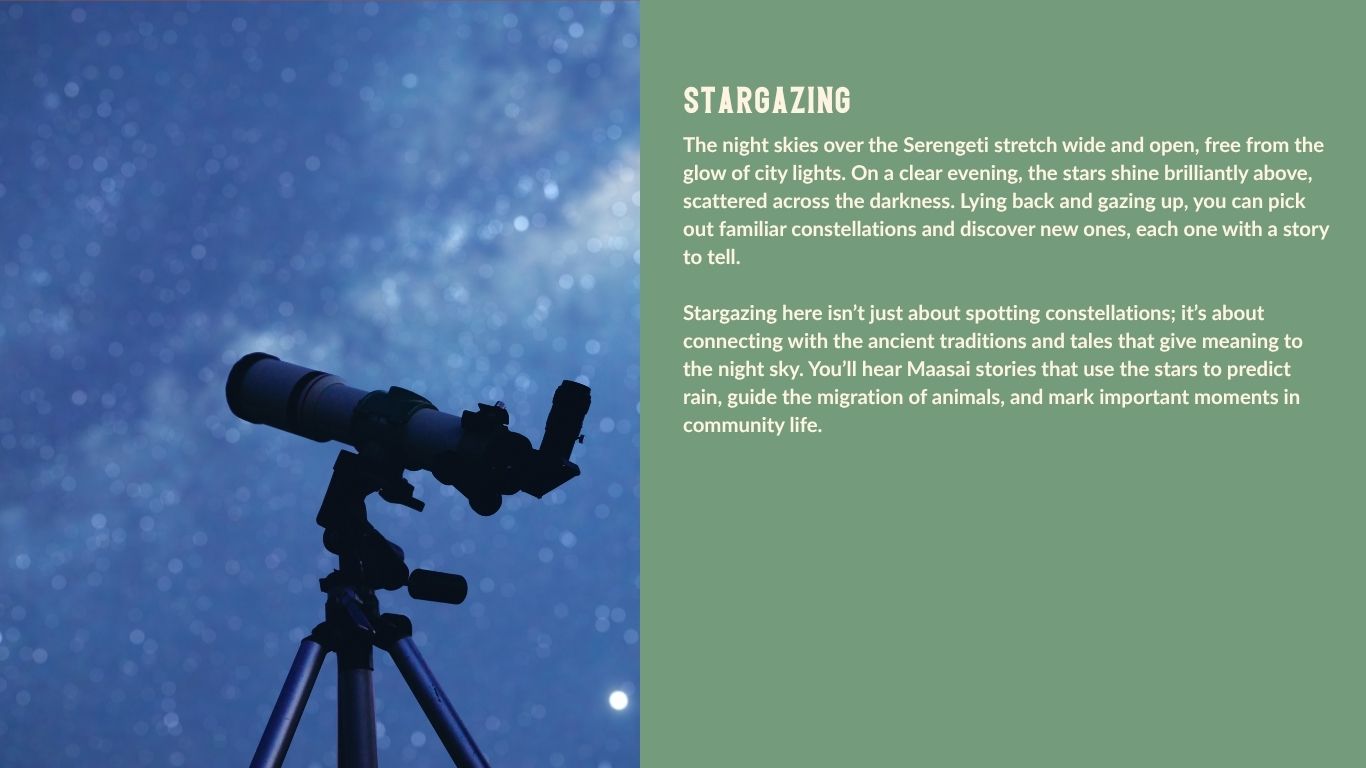
From game drives to stargazing by the campfire, every moment is crafted to leave you spellbound.

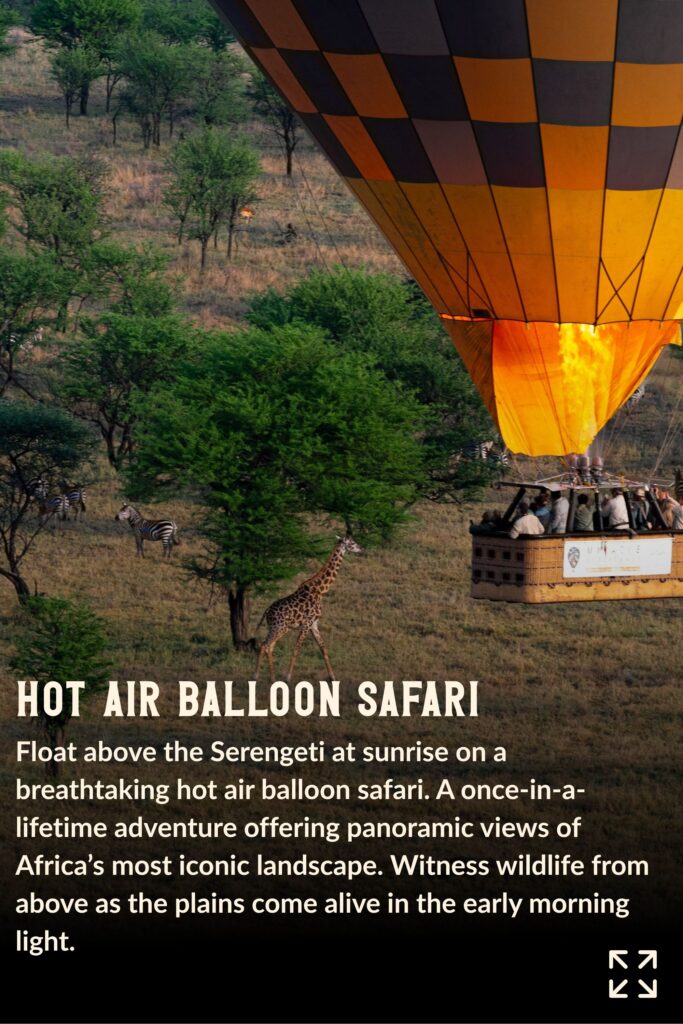
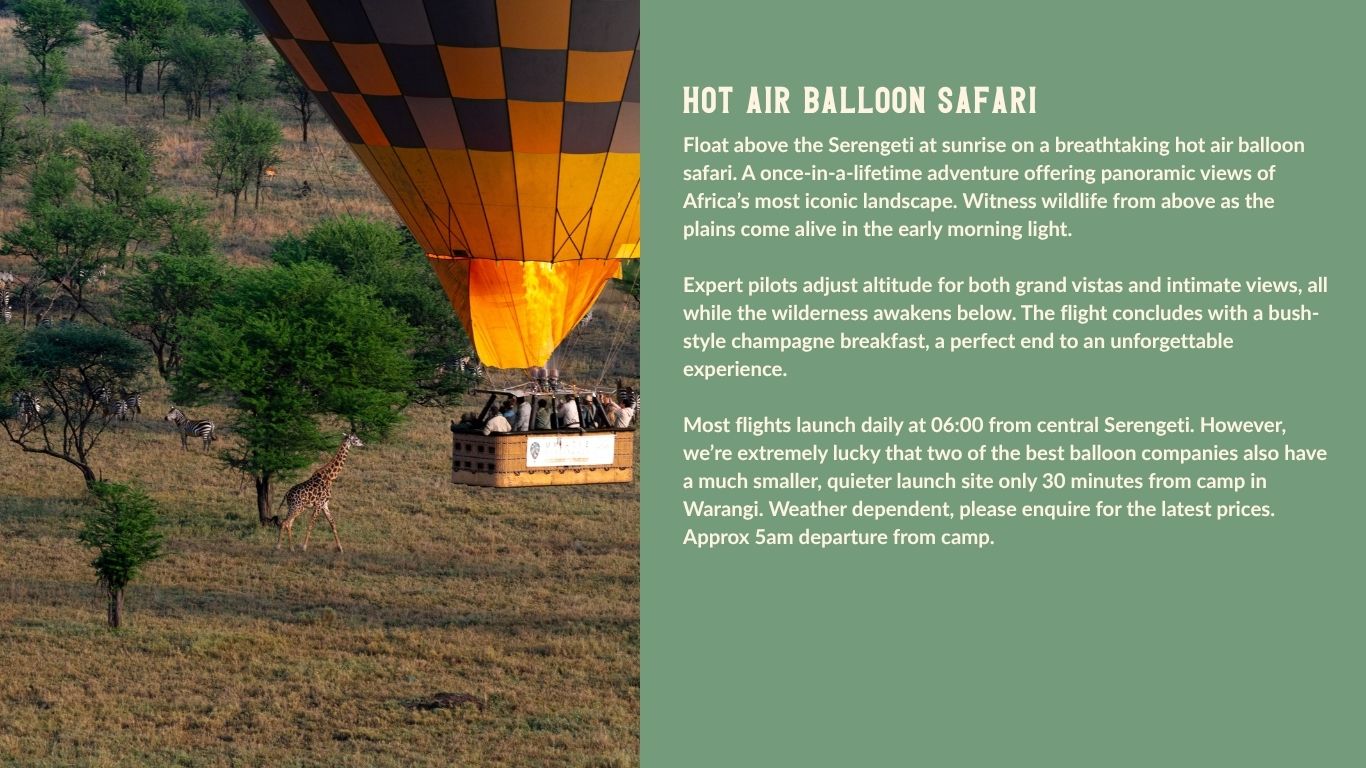
Flights launch daily at 06:00 from select sites across the Serengeti, with routes adjusted seasonally to maximise sightings, including views of the Great Migration between December and March in Ndutu. While this premium experience comes at a higher cost, the magic of seeing the Serengeti from the air makes it worth every moment.

Hot air balloon safari

Float above the Serengeti at sunrise on a breathtaking hot air balloon safari. A once-in-a-lifetime adventure offering panoramic views of Africa’s most iconic landscape. From sweeping savannas to winding rivers, witness wildlife from above as the plains come alive in the early morning light.

Spot giraffes, elephants, and even lions as you glide silently across the sky. Expert pilots adjust altitude for both grand vistas and intimate views, all while the wilderness awakens below. The flight concludes with a bush-style champagne breakfast; a perfect end to an unforgettable experience.

THe Moru kopjes

Located in the southern-central region of the Serengeti National Park, the Moru Kopjes are a distinctive cluster of ancient granite outcrops rising from the open plains. Formed millions of years ago, these weathered rock formations create a striking contrast to the surrounding grasslands and serve as natural landmarks in one of Africa’s most celebrated ecosystems.

“Kopje” (pronounced ko-pee) is a word used to describe isolated rocky hills found across southern and eastern Africa. The Moru Kopjes are composed primarily of exposed granite shaped by erosion over vast stretches of time. Their elevated vantage points provide sweeping views across the Serengeti plains — for wildlife and visitors alike.

The Moru Kopjes also hold cultural importance. Gong Rock, one of the best-known formations in the area, contains Maasai rock paintings and is considered a site of historical and spiritual significance. These markings offer insight into the long-standing human presence within the Serengeti ecosystem.

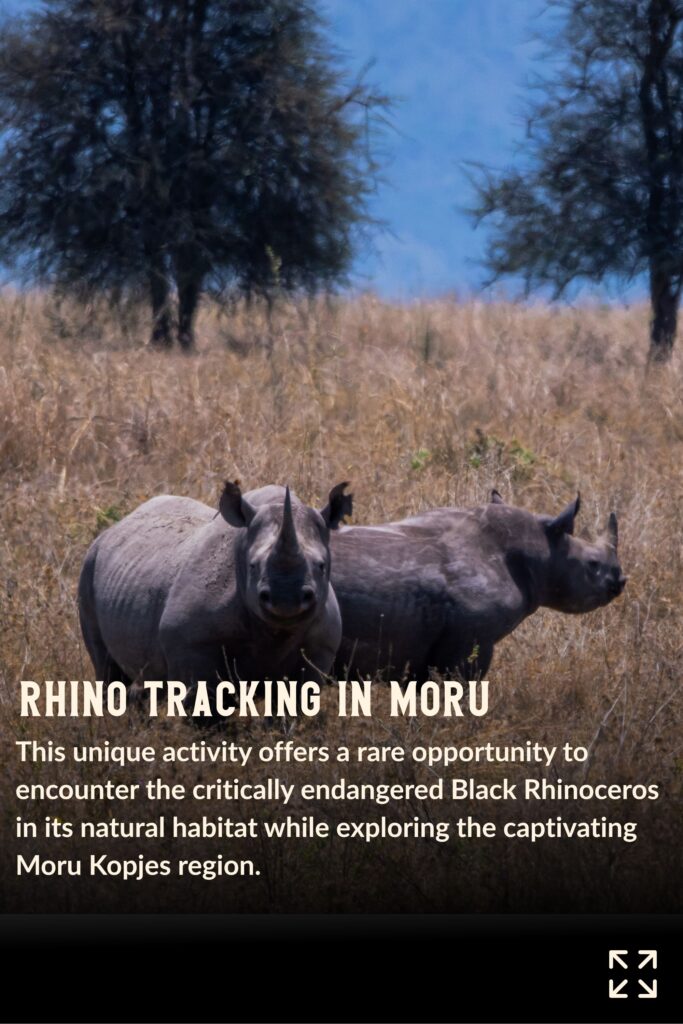
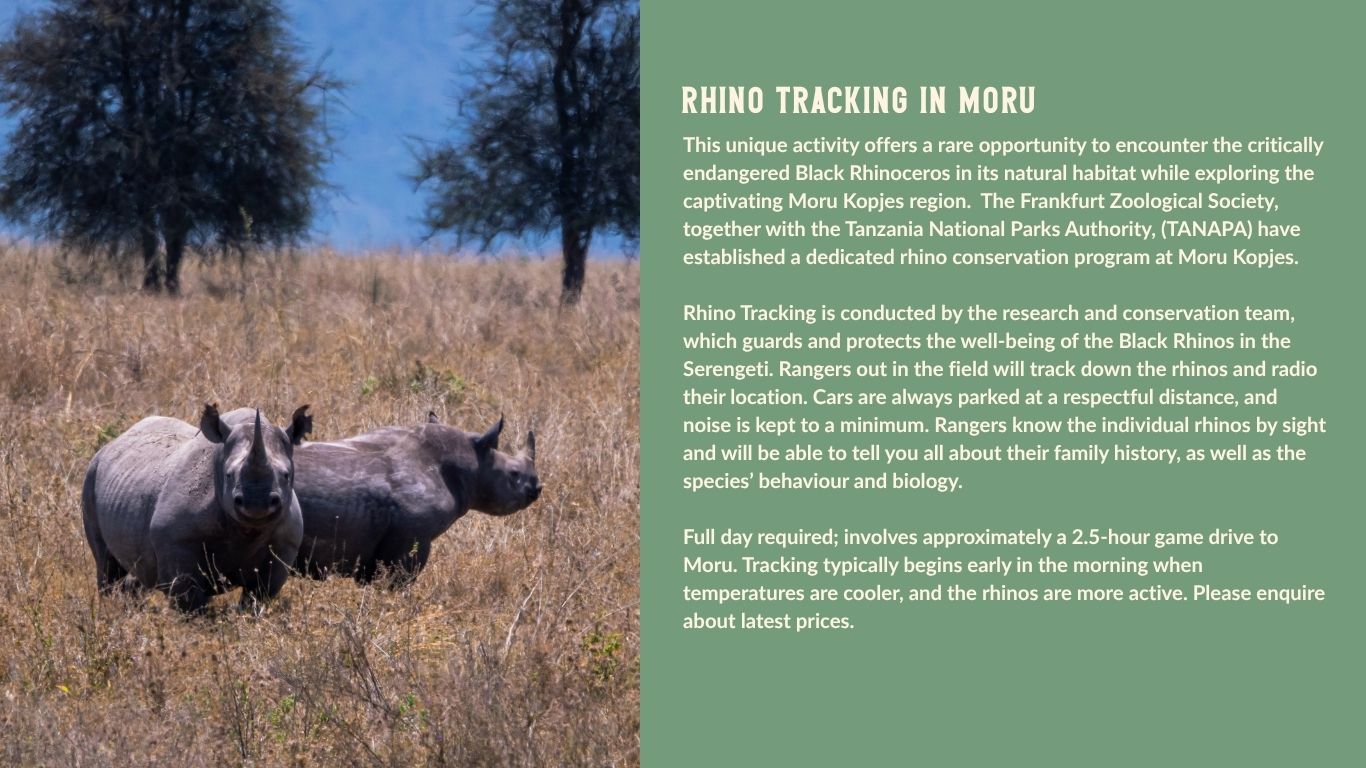
The Moru Kopjes are known for consistent, year-round wildlife sightings. Most importantly, the Moru area is one of the few places in the Serengeti where the endangered black rhinoceros has been reintroduced and is protected under close monitoring. Sightings are rare but possible with experienced guides.

rhino conservation

In the 1970s, the Serengeti National Park was home to an estimated 700 eastern black rhinos. Tragically, widespread poaching devastated the population. By the early 1980s, only a handful of rhinos remained in the Serengeti, and by the 1990s the species had been nearly eradicated across Tanzania.

In response to the crisis, the Tanzanian government initiated a nationwide rhino survey in 1993, funded by the Frankfurt Zoological Society. It confirmed just three black rhinos were surviving in the Moru Kopjes area of the central Serengeti.

The Frankfurt Zoological Society, alongside the Tanzania National Parks Authority established a dedicated rhino conservation program at Moru Kopjes.

At the heart stands the Michael Grzimek Memorial Rhino Post, strategically built atop one of the region’s characteristic granite kopjes.

Today, the Moru Kopjes region is one of Tanzania’s vital refuges for black rhino conservation. While the population remains carefully protected and closely monitored, the survival of rhinos in this landscape stands as a testament to sustained collaboration, long-term investment, and dedicated conservation work.

serengeti cheetah project

Established in 1975, the Serengeti Cheetah Project is the world’s longest-running study of wild cheetahs. Based in Serengeti National Park, the project has been instrumental in advancing global understanding of cheetah ecology, behavior, and conservation.

By identifying individuals through their unique spot patterns, researchers monitor territory use, hunting behavior, reproduction, cub survival, and long-term population trends.

Research conducted in the Serengeti’s largely intact ecosystem helps guide conservation strategies across Africa. For visitors, a cheetah sighting is not only a remarkable wildlife encounter, but also part of an ongoing scientific effort dedicated to protecting one of the continent’s most iconic and vulnerable predators.

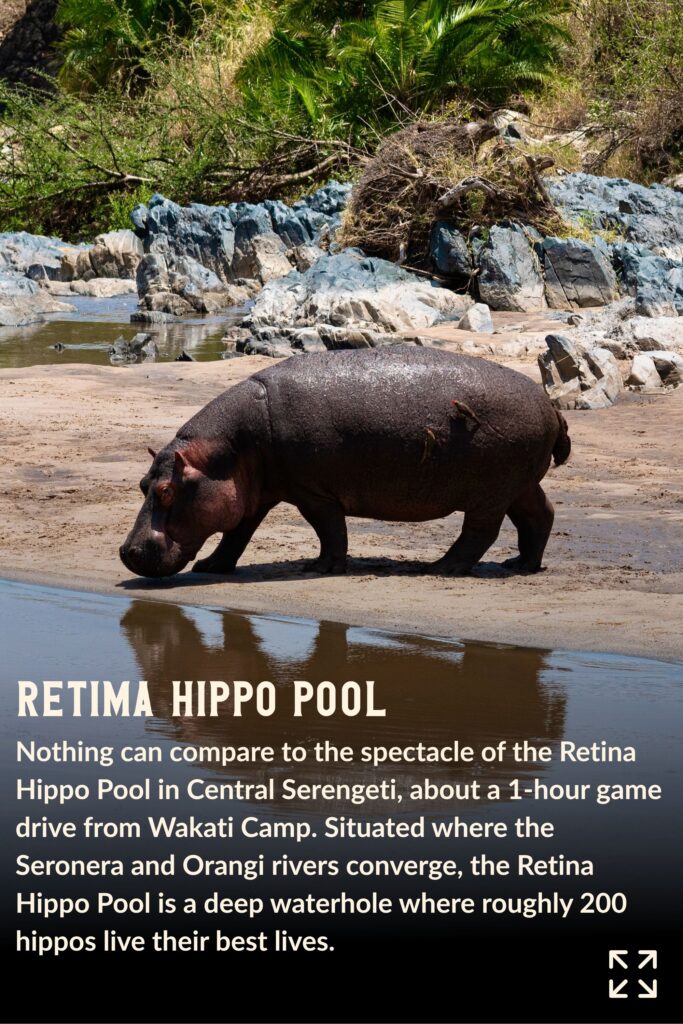
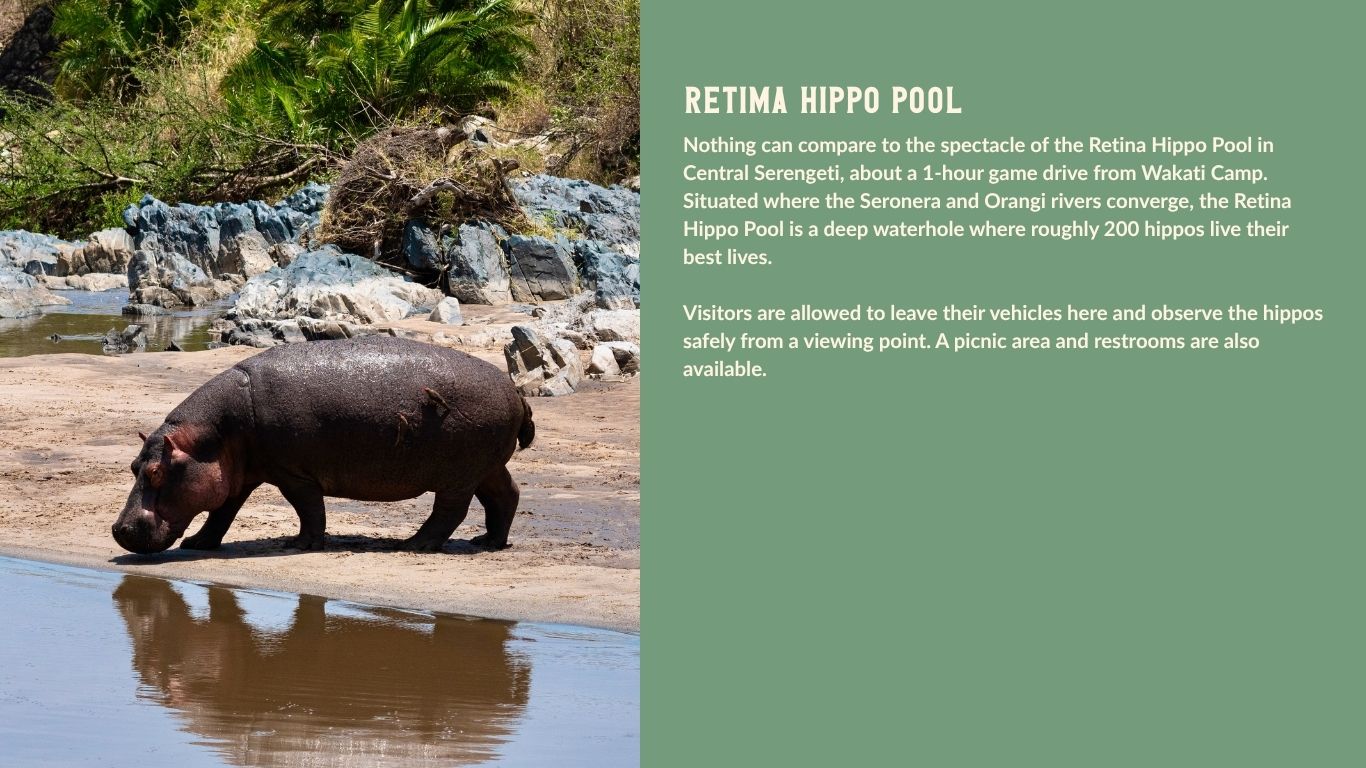
As evening falls, the hippos emerge from the pools and disperse across the surrounding plains to graze under cover of darkness, sometimes traveling several kilometers before returning at dawn. This daily migration between water and grassland is a defining rhythm of life in the Serengeti.

the hippo pool

The Retima Hippo Pools are one of the region’s wildlife spectacles. Fed by the Seronera River, these permanent pools provide a vital year-round water source and a sanctuary where more than 200 hippos gather daily to bathe, rest, and socialize.

At any given time, the pools are alive with activity. Massive bodies crowd the water, jostling for space as they submerge to keep cool beneath the midday sun. Deep grunts, sudden splashes, and dramatic open-mouthed displays create an unforgettable sensory experience.

Visitors can observe the complex social dynamics of hippos up close — from dominant bulls asserting territory to mothers sheltering calves in the shallows.